
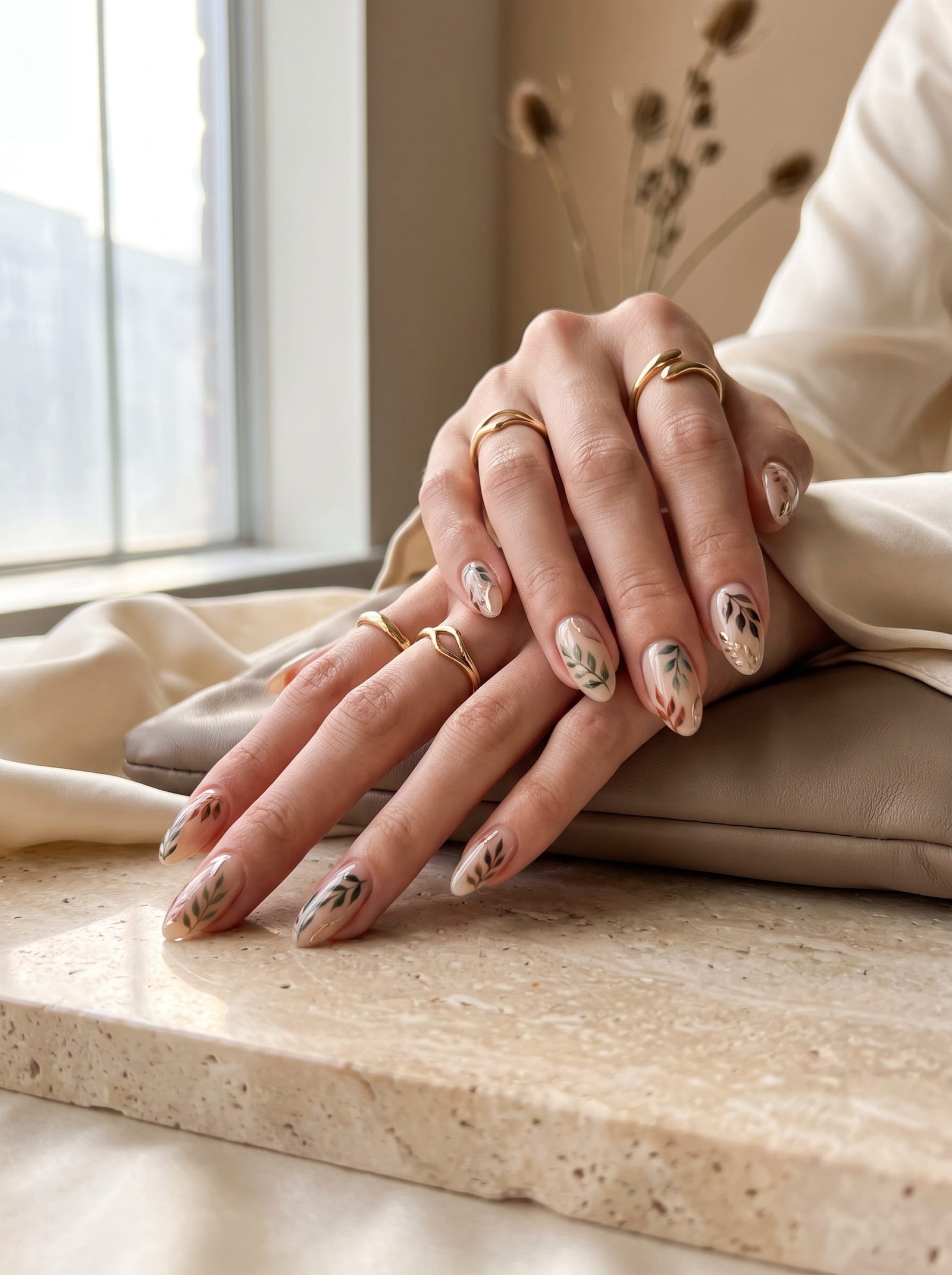
Leaf-inspired manicures bring a softer, more artistic dimension to nail styling. Instead of relying on obvious seasonal motifs, the best leaf nail art ideas 2026 use delicate foliage, refined color palettes, negative space, metallic accents, and modern finishes to create manicures that feel polished and wearable.
From minimalist sage leaves on a sheer nude base to dramatic forest-green botanicals and warm autumn foliage, there is a leaf design for almost every nail length, shape, and personal style. Whether you prefer understated everyday nails or a more detailed manicure for an event, these ideas offer plenty of ways to make nature-inspired nail art feel sophisticated.
1. Minimal Sage Leaf Nails
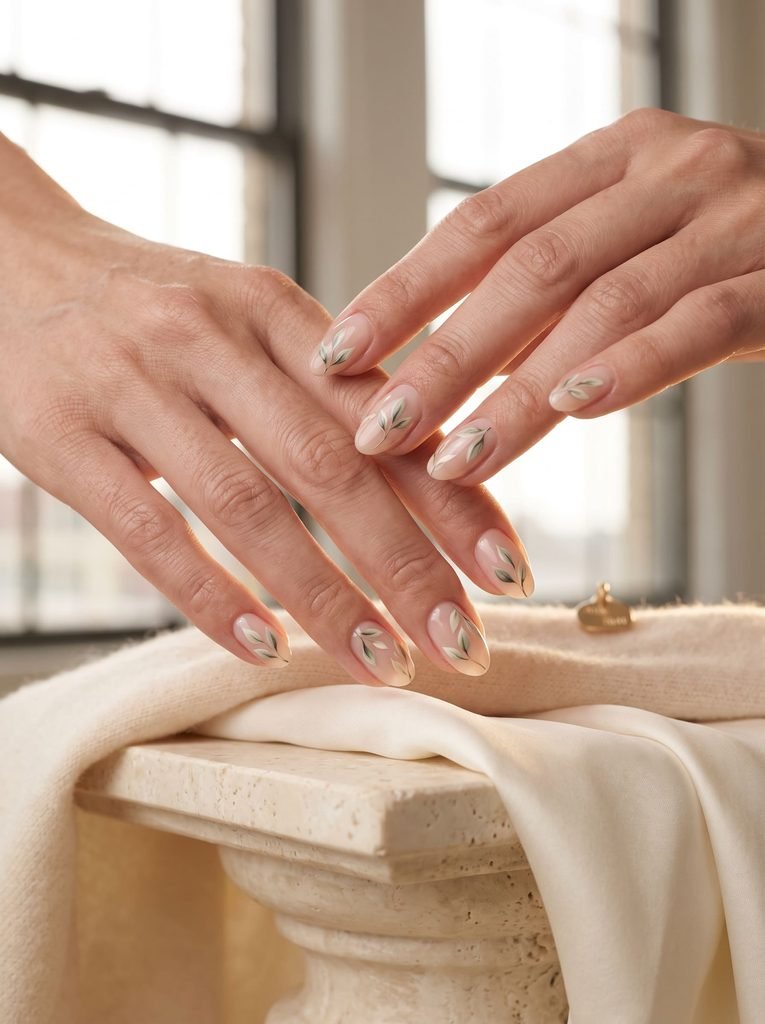
A sheer nude or milky-pink base makes delicate sage leaves look especially refined. Keep the foliage small and position it along one side of each accent nail rather than covering the entire surface.
This design works beautifully on short oval, squoval, and almond nails. Pair it with cream knitwear, beige tailoring, or soft denim for an understated everyday look.
2. Botanical French Tip Nails

Give the classic French manicure a botanical update by replacing traditional white tips with tiny leafy branches. A transparent or nude base keeps the design clean while allowing the foliage to become the focal point.
Try muted green for a subtle manicure, or introduce olive and brown for a warmer autumn interpretation. The result feels contemporary without losing the elegance of a French manicure.
3. Olive Leaf and Cream Nails
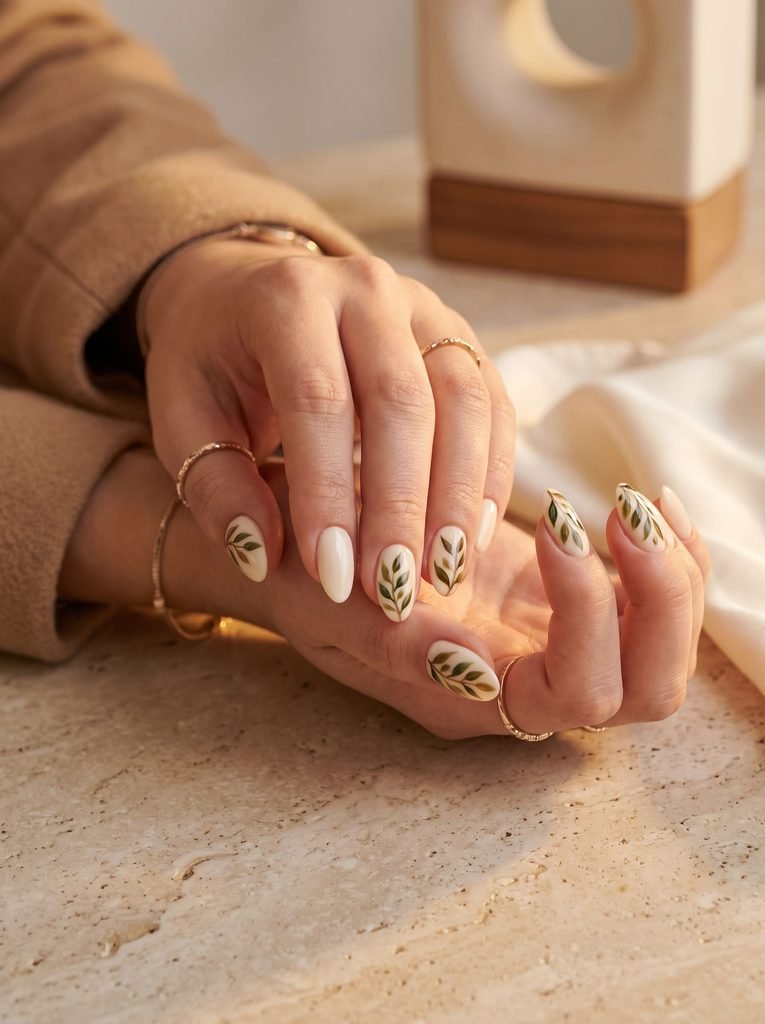
Olive green becomes particularly sophisticated when combined with a warm cream base. Paint slender olive branches across one or two nails while keeping the remaining nails simple.
The restrained palette makes this one of the most versatile leaf nail designs for everyday wear. It also pairs naturally with camel coats, ivory sweaters, chocolate handbags, and gold jewelry.
4. Autumn Rust Leaf Nails
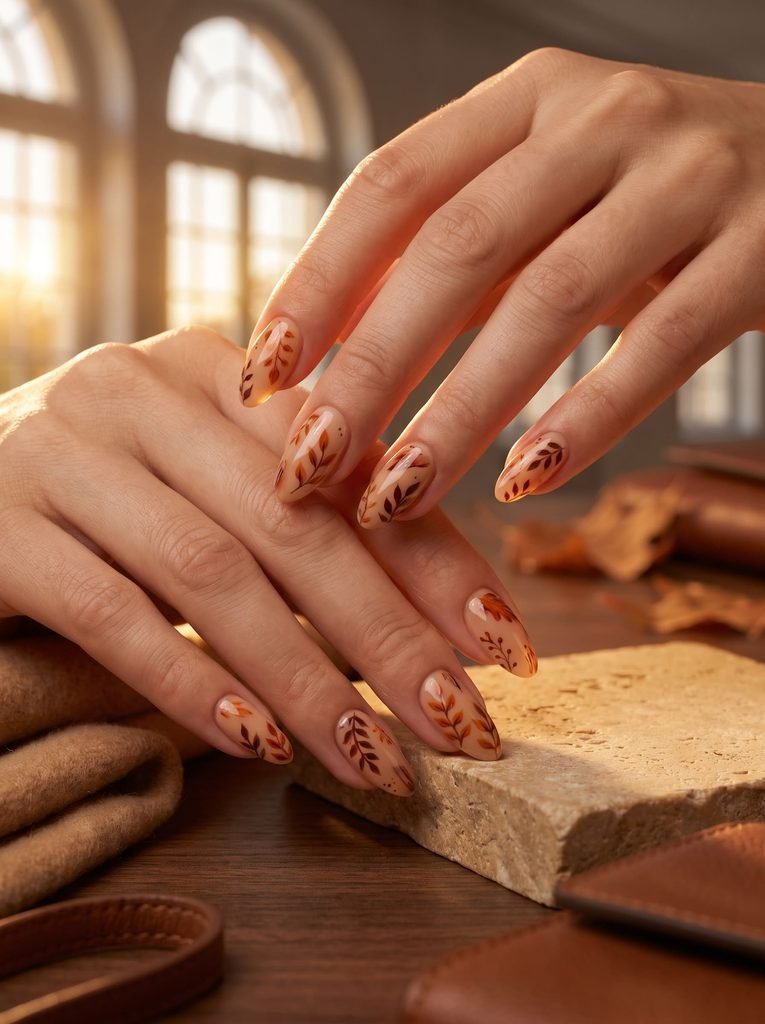
For a distinctly seasonal manicure, combine rust, burnt orange, cinnamon, and muted brown leaves over a nude or soft beige base.
Rather than creating identical leaves on every nail, vary their size and placement. A few scattered leaves create a more natural botanical effect and prevent the manicure from looking overly uniform.
5. Forest Green Botanical Nails
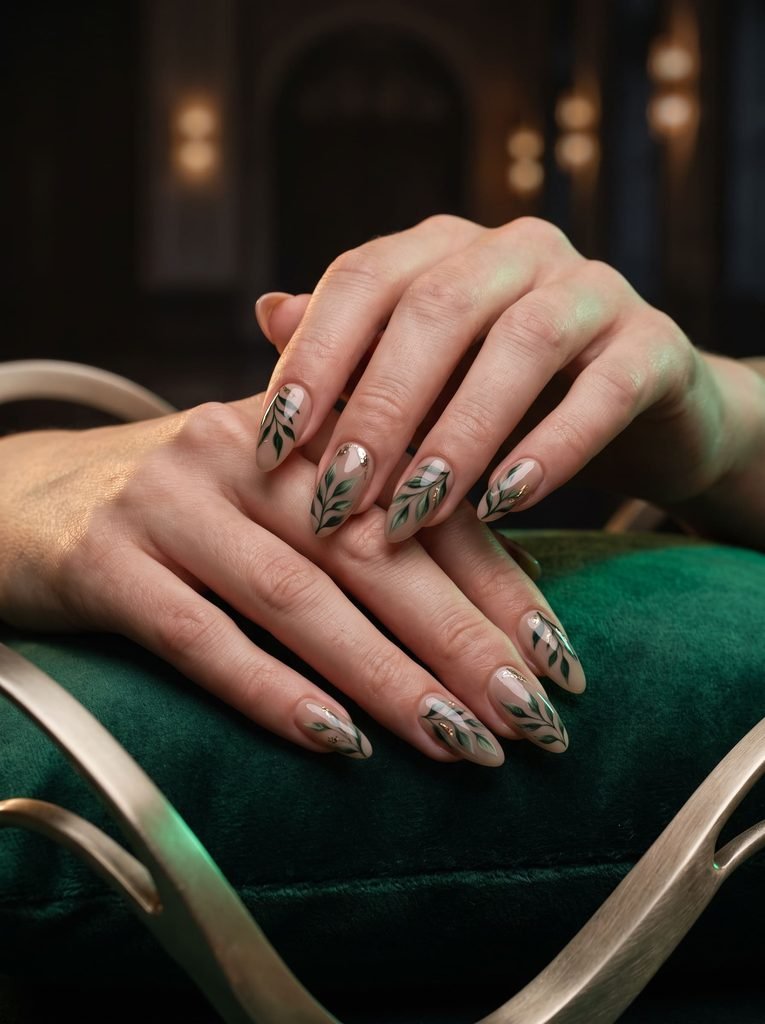
Deep forest green creates a richer interpretation of nature-inspired nail art. Use a neutral, taupe, or translucent base and add dark green leaves with thin stems.
For evening wear, introduce a subtle champagne-gold accent on one or two nails. The contrast between deep green and warm metallic detailing gives the manicure a more luxurious finish.
6. Nude Nails With Fine-Line Foliage

Fine-line botanical artwork is ideal when you want minimalist leaf nails that remain elegant and easy to wear.
Use a sheer nude, blush, or translucent beige base with extremely thin brown or muted-green stems. Keep the leaves small and slightly asymmetrical for a hand-drawn appearance.
This approach works particularly well for professional settings because the overall manicure remains subtle.
7. Gold Leaf Botanical Accents
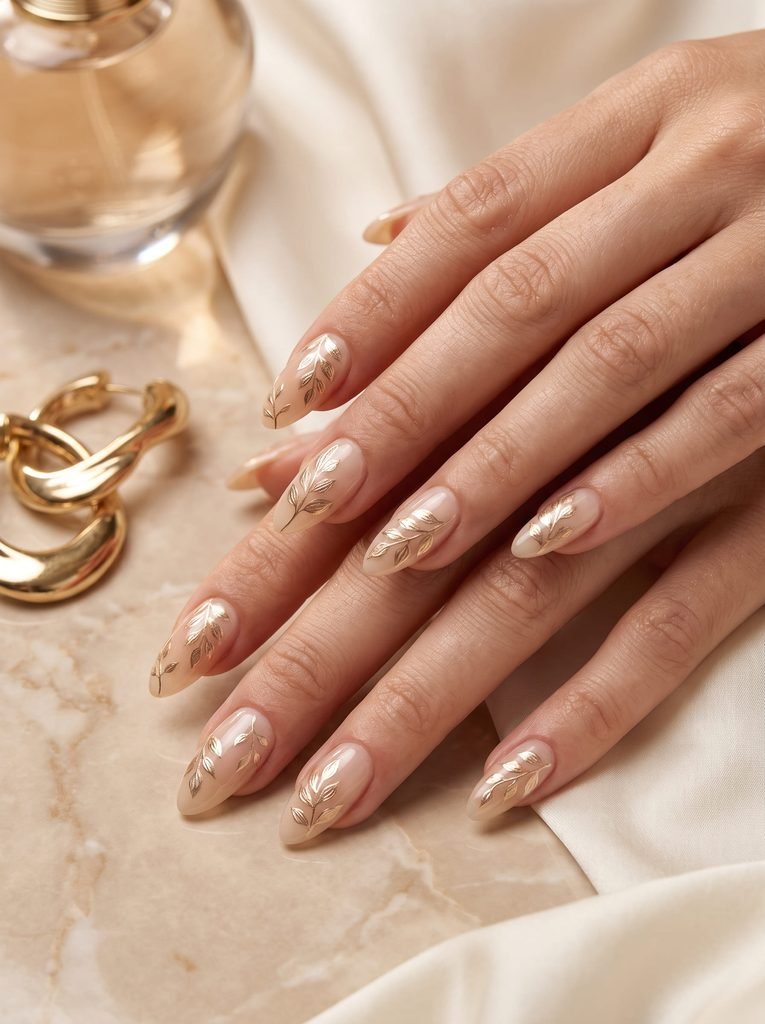
Gold detailing can transform a simple botanical manicure into something more glamorous. Start with a nude, ivory, or chocolate base and add delicate leaves in metallic gold.
The key is restraint. A few precisely placed leaves will look more sophisticated than heavy metallic coverage. This design is particularly fitting for weddings, dinner events, celebrations, and polished evening outfits.
8. Espresso Brown Leaf Nails
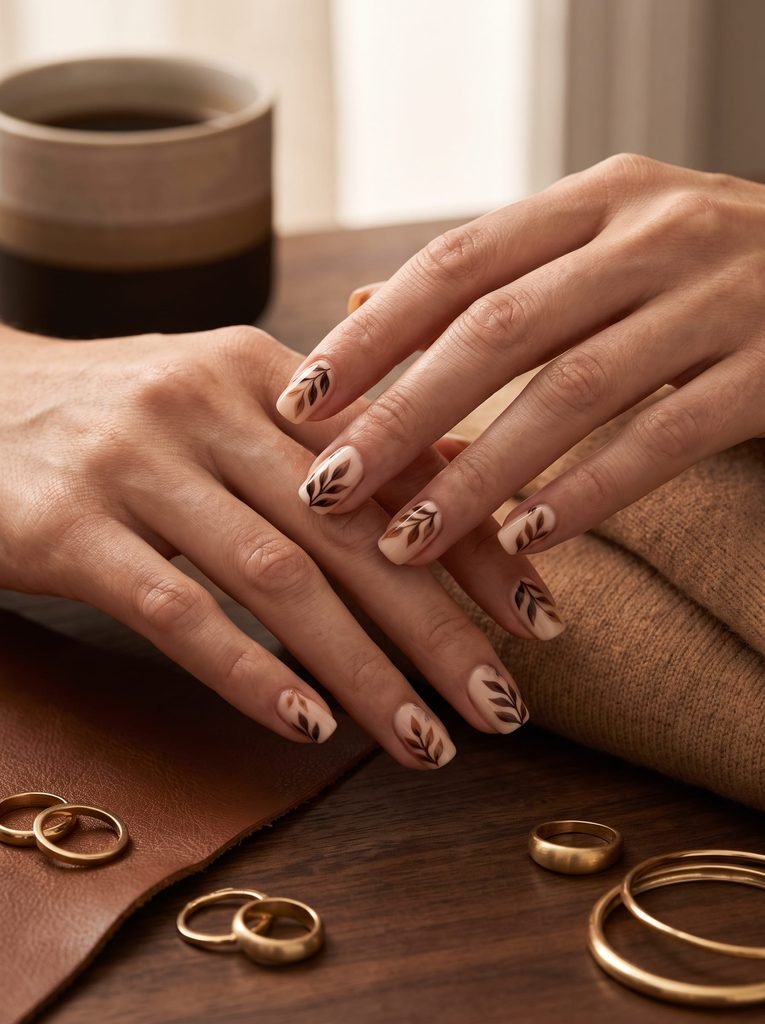
Chocolate and espresso tones provide a modern alternative to traditional green botanical nail art.
Try a creamy nude base with espresso-brown leaves and fine branches. For a richer manicure, use a chocolate base on two nails and botanical artwork on the others.
This warm palette complements autumn wardrobes especially well, including camel coats, cream knits, dark denim, suede accessories, and brown leather.
9. Negative-Space Leaf Nail Art

Negative space allows the natural or sheer base of the nail to become part of the design.
Paint small leaves along the edges or corners of the nails while leaving generous areas uncovered. This creates an airy composition that feels modern rather than busy.
It is also an excellent approach for shorter nails because the open space visually prevents the manicure from feeling crowded.
10. Sage and Ivory Botanical Nails

For a softer interpretation of botanical nail art, combine muted sage leaves with ivory and creamy white details.
The low-contrast palette creates a delicate manicure that works across seasons. Add a glossy top coat for a clean finish, or choose a soft matte finish if you prefer a more contemporary appearance.
These nature-inspired nail designs are especially easy to coordinate with neutral wardrobes.
11. Burgundy Autumn Foliage

Burgundy leaves offer a more dramatic alternative to traditional green botanical designs.
Use a sheer nude or warm beige base and create foliage in burgundy, wine, and muted brown. A tiny amount of gold can be incorporated into the stems for an evening-ready finish.
This design is particularly effective on almond or medium-length oval nails, where elongated branches can follow the natural shape of the nail.
12. Delicate Leaf Branches
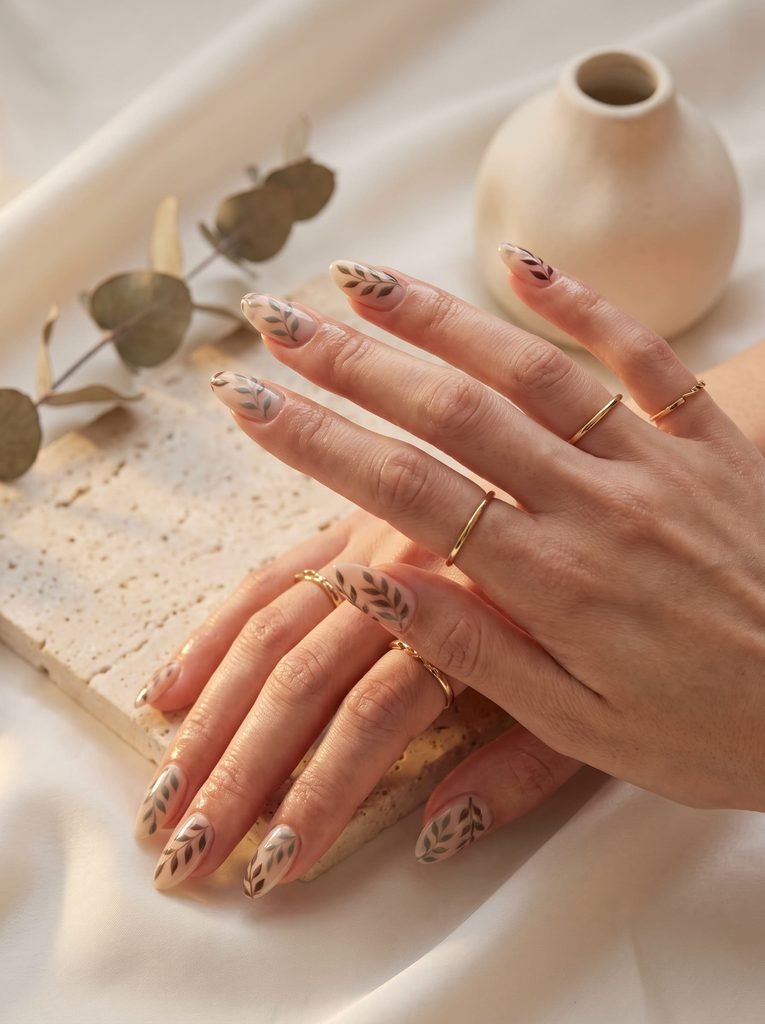
Instead of painting individual leaves, create miniature branches that travel diagonally across selected nails.
This gives the manicure a more editorial quality because the artwork follows a deliberate visual direction. Keep the remaining nails relatively simple so the branches remain the focus.
A combination of taupe, muted green, and ivory creates a particularly polished palette.
13. Matte Earth-Tone Leaf Nails

Matte finishes can make botanical colors appear softer and more sophisticated.
Try a matte beige, clay, olive, or chocolate base with contrasting foliage. The absence of high shine gives the artwork a velvety appearance while emphasizing the shapes of the leaves.
For a subtle contrast, leave one or two leaves glossy against the matte background.
14. Chrome Botanical Details
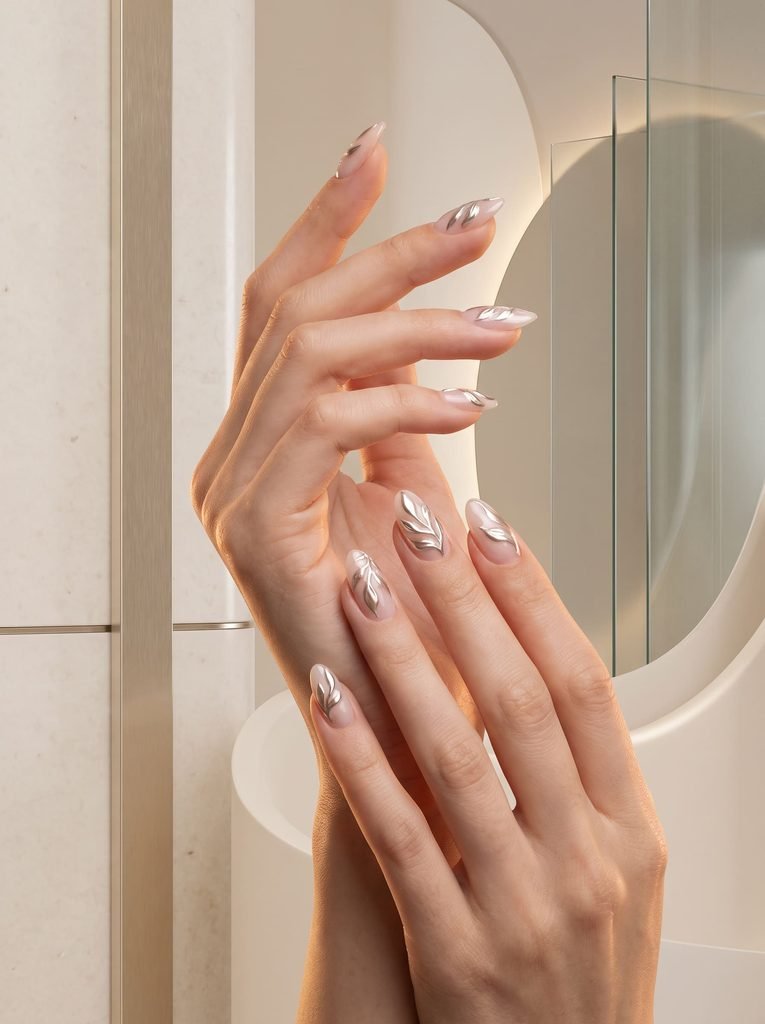
For a contemporary take on leaf nail art, combine traditional botanical shapes with a modern chrome finish.
A sheer pink, nude, or milky base allows chrome leaves to catch the light without overwhelming the manicure. Silver works beautifully with cool neutrals, while champagne or bronze chrome suits warmer palettes.
This option is ideal when you want nature-inspired nails with a distinctly modern edge.
15. Luxe Layered Botanical Nails

For the most detailed look in the collection, layer different botanical elements across a neutral base.
Combine fine branches, small leaves, subtle metallic accents, and tonal green shades rather than relying on one flat color. Keep the composition concentrated on selected nails so the overall manicure maintains balance.
Almond and long oval nails provide enough space for more intricate artwork, while a neutral base keeps the finished look sophisticated.
How to Choose the Right Leaf Nail Design
The most flattering botanical manicure depends on more than color. Nail length, shape, finish, wardrobe, and occasion can all influence which design works best.
For Short Nails
Choose:
- Micro leaves
- Fine-line branches
- Negative-space designs
- Single accent leaves
- Minimal French foliage
Keeping the artwork relatively small gives short nails a clean, intentional appearance.
For Almond Nails
Almond nails suit elongated branches and diagonal foliage particularly well. The naturally tapered silhouette makes botanical artwork feel graceful and balanced.
For Square or Squoval Nails
Try compact leaf clusters, French-tip foliage, or geometric botanical accents. These designs work nicely with the stronger edges of the nail shape.
For Long Nails
Longer nails provide more space for layered branches, larger leaves, mixed finishes, and detailed botanical compositions.
Best Colors for Leaf Nail Art
Green is an obvious choice, but it is far from the only option.
For a soft manicure, consider sage, olive, eucalyptus, and muted moss.
For autumn, experiment with rust, cinnamon, terracotta, caramel, espresso, and burgundy.
For a luxurious finish, combine botanical shades with champagne, antique gold, bronze, or subtle chrome.
Neutral bases such as milky white, sheer pink, nude, taupe, and ivory allow the foliage to remain the visual focus.
How to Make Leaf Nails Look More Elegant
The difference between a polished botanical manicure and an overly busy one often comes down to restraint.
Choose a limited color palette instead of using several unrelated shades. Vary the size and placement of the leaves rather than repeating the same motif on every nail. Leave some negative space, particularly when the artwork is detailed.
It also helps to match the finish to the overall aesthetic. Glossy finishes feel fresh and classic, while matte surfaces create a softer, more editorial effect. Metallic accents should generally be used as highlights rather than covering large areas.
What to Wear With Leaf Nail Art
Leaf manicures pair naturally with fashion colors found throughout the wardrobe.
Sage and olive nails complement ivory, cream, camel, denim, and soft gray.
Rust and terracotta leaves work beautifully with chocolate brown, beige, black, and warm neutrals.
Burgundy foliage pairs naturally with charcoal, black, cream, camel, and deep brown.
Gold botanical details look especially polished with satin, silk, tailored neutrals, and understated gold jewelry.
For everyday styling, keep your outfit relatively simple and allow the manicure to provide the botanical detail.
How to Personalize Nature-Inspired Nail Designs
You do not need to reproduce a botanical manicure exactly as shown. Small changes can make the design feel much more personal.
Change the leaf color to match your favorite wardrobe palette, move the artwork toward the cuticle or sidewall, replace a glossy finish with matte, or add one metallic accent nail.
You can also reduce a detailed design to just two accent nails for a quieter manicure. Conversely, longer nails give you the freedom to combine several botanical elements into one cohesive composition.
The best leaf nail art ideas 2026 are not necessarily the most complicated. They are the ones where color, placement, finish, and nail shape work together.
FAQs
1. Are leaf nail designs still stylish in 2026?
Yes. Leaf motifs remain versatile because they can be interpreted through minimalist fine lines, French tips, muted botanical colors, metallic accents, and more detailed foliage.
2. Can I wear leaf nail art on short nails?
Absolutely. Small leaves, fine-line branches, negative space, and single accent designs are particularly well suited to short nails.
3. What colors work best for leaf nail art?
Sage, olive, forest green, brown, rust, burgundy, cream, nude, and taupe are versatile choices. Gold and bronze can add a more luxurious accent.
4. Which nail shape is best for botanical designs?
There is no single required shape. Almond and oval nails work beautifully with elongated foliage, while short squoval and square nails suit compact botanical details and minimalist designs.
5. How can I make leaf nail art look sophisticated?
Use a restrained color palette, leave some negative space, vary the placement of the foliage, and avoid overcrowding every nail with detailed artwork. A refined base color can also make intricate details feel more polished.
Conclusion
The appeal of leaf nail art ideas 2026 lies in their flexibility. A tiny sage branch can create an understated everyday manicure, while burgundy foliage, gold accents, or layered botanical artwork can turn the same concept into something more dramatic.
Choose your design according to your nail shape, preferred colors, wardrobe, and occasion rather than simply following one trend. With thoughtful placement and a controlled palette, leaf-inspired nail art can feel modern, elegant, and distinctly personal.
[…] of the wardrobe—and this season, its soft textures and rich colors can inspire your manicure too. Fall sweater nail designs 2026 bring cable-knit patterns, ribbed textures, cashmere neutrals, woven details, and warm seasonal […]